A 7-week-old baby in Oregon is battling two rare conditions in a hospital pediatric intensive care unit nearly two months after his birth.
Jack Arneson was born Jan. 26 at Doernbecher Children’s Hospital, part of Oregon Health and Sciences University (OHSU) in Portland, Oregon, with a rare congenital heart defect called Ebstein’s anomaly, his father Zach Arneson of Ridgefield, Washington told ABC News.
But shortly after birth, Jack’s care team noticed he was having other issues aside from heart problems.
One of his doctors, Dr. Laura Miller-Smith, division chief of pediatric critical care and medical director of pediatric cardiac critical care at Doernbecher Children’s Hospital, said it wasn’t until Jack received genetic testing that they determined he also had another rare genetic disorder called Sotos syndrome.
“The symptoms we were seeing that we now know are from his Sotos syndrome were severe difficulty with maintaining his sugar level,” Dr. Miller-Smith said of Jack’s symptoms. “His glucose levels would fall quite low and he was needing very high replacement in order to keep it in a safe range.”
Related Articles
NICU baby treated by same neonatal doctor as her mom goes home after 9 months
According to the National Library of Medicine, Ebstein’s anomaly is a malformation of the heart where the tricuspid valve is displaced, which can cause blood regurgitation, right ventricular failure, and arrhythmias.
“For Jack, his Ebstein’s anomaly is very severe, where early in life, there was difficulties with getting blood flow to go the appropriate direction, through his body, through his lungs, and out to his body,” Miller-Smith explained.
Children with Sotos syndrome, according to the National Library of Medicine, have symptoms like fast physical growth, distinct facial features like a broad forehead, and developmental delays.
Related Articles
17-year-old returns to cheering after rare combined heart, kidney double transplant
Miller-Smith said what makes Jack and his story unique is the combination of both rare conditions. One in 20,000 children have Ebstein’s anomaly, according to research published in the International Journal of Epidemiology, and Sotos syndrome occurs in about one in 15,000 children. Miller-Smith said she doesn’t know what the odds are for kids with both conditions.
“We know Sotos syndrome is associated with heart disease [but] we have not yet found a combination like this, with this severity of heart disease,” she said. “It’s not been reported in the [scientific] literature and some other experts we have spoken to have not seen this combination.”
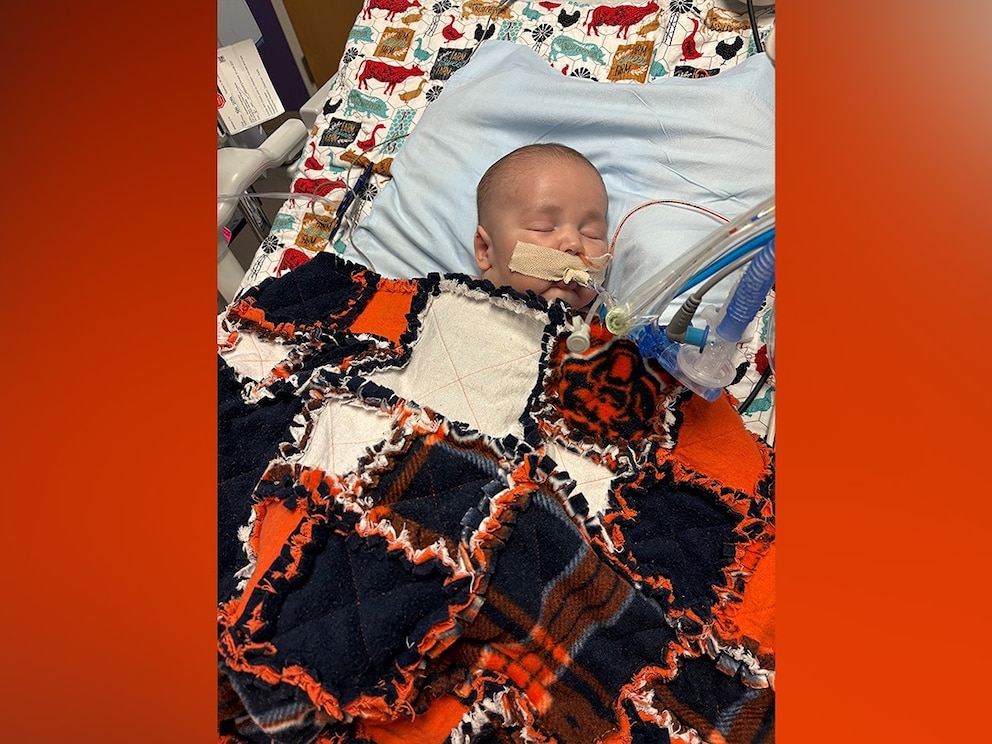
Because of his conditions, Jack has already had one heart surgery, is connected to a mechanical ventilator to help him breathe and needs ongoing round-the-clock care, especially to keep his blood sugar levels in check.
“It’s so difficult when you first see your child hooked up to all those machines and everything. That’s like a shock to the system,” Arneson said.
Arneson said he and his wife, Danielle Arneson, who are also parents to two older kids, are taking it day by day with Jack in the hospital and remaining hopeful that he can get better before he gets another open-heart surgery.
Arneson added that he and his family wanted to raise awareness of Jack’s rare conditions.
“If there’s another kid out there somewhere that has something similar to this going on, hopefully. this can bring more attention to it,” he said.
Miller-Smith added that Jack’s story also highlights the extra support kids like Jack and their families need.
“These families need a lot of support, both from resources in the hospital and from their community,” she said.
Arneson said his sister has set up an online fundraiser to help support his family and cover Jack’s medical expenses.
A 7-week-old baby in Oregon is battling two rare conditions in a hospital pediatric intensive care unit nearly two months after his birth.
Jack Arneson was born Jan. 26 at Doernbecher Children’s Hospital, part of Oregon Health and Sciences University (OHSU) in Portland, Oregon, with a rare congenital heart defect called Ebstein’s anomaly, his father Zach Arneson of Ridgefield, Washington told ABC News.
But shortly after birth, Jack’s care team noticed he was having other issues aside from heart problems.
Jack Arneson, 7 weeks, was born with Ebstein’s anomaly, a rare congenital heart defect, and after birth was diagnosed with a second rare genetic condition called Sotos syndrome.
Courtesy of the Arneson family
One of his doctors, Dr. Laura Miller-Smith, division chief of pediatric critical care and medical director of pediatric cardiac critical care at Doernbecher Children’s Hospital, said it wasn’t until Jack received genetic testing that they determined he also had another rare genetic disorder called Sotos syndrome.
“The symptoms we were seeing that we now know are from his Sotos syndrome were severe difficulty with maintaining his sugar level,” Dr. Miller-Smith said of Jack’s symptoms. “His glucose levels would fall quite low and he was needing very high replacement in order to keep it in a safe range.”
Related Articles
NICU baby treated by same neonatal doctor as her mom goes home after 9 months
According to the National Library of Medicine, Ebstein’s anomaly is a malformation of the heart where the tricuspid valve is displaced, which can cause blood regurgitation, right ventricular failure, and arrhythmias.
“For Jack, his Ebstein’s anomaly is very severe, where early in life, there was difficulties with getting blood flow to go the appropriate direction, through his body, through his lungs, and out to his body,” Miller-Smith explained.
Children with Sotos syndrome, according to the National Library of Medicine, have symptoms like fast physical growth, distinct facial features like a broad forehead, and developmental delays.
Related Articles
17-year-old returns to cheering after rare combined heart, kidney double transplant
Miller-Smith said what makes Jack and his story unique is the combination of both rare conditions. One in 20,000 children have Ebstein’s anomaly, according to research published in the International Journal of Epidemiology, and Sotos syndrome occurs in about one in 15,000 children. Miller-Smith said she doesn’t know what the odds are for kids with both conditions.
“We know Sotos syndrome is associated with heart disease [but] we have not yet found a combination like this, with this severity of heart disease,” she said. “It’s not been reported in the [scientific] literature and some other experts we have spoken to have not seen this combination.”
Because of his conditions, Jack has already had one heart surgery, is connected to a mechanical ventilator to help him breathe and needs ongoing round-the-clock care, especially to keep his blood sugar levels in check.
“It’s so difficult when you first see your child hooked up to all those machines and everything. That’s like a shock to the system,” Arneson said.
As baby Jack remains in a hospital pediatric intensive care unit, the Arneson family are hoping he will get healthy enough to be discharged home until he needs a second heart surgery.
Courtesy of the Arneson family
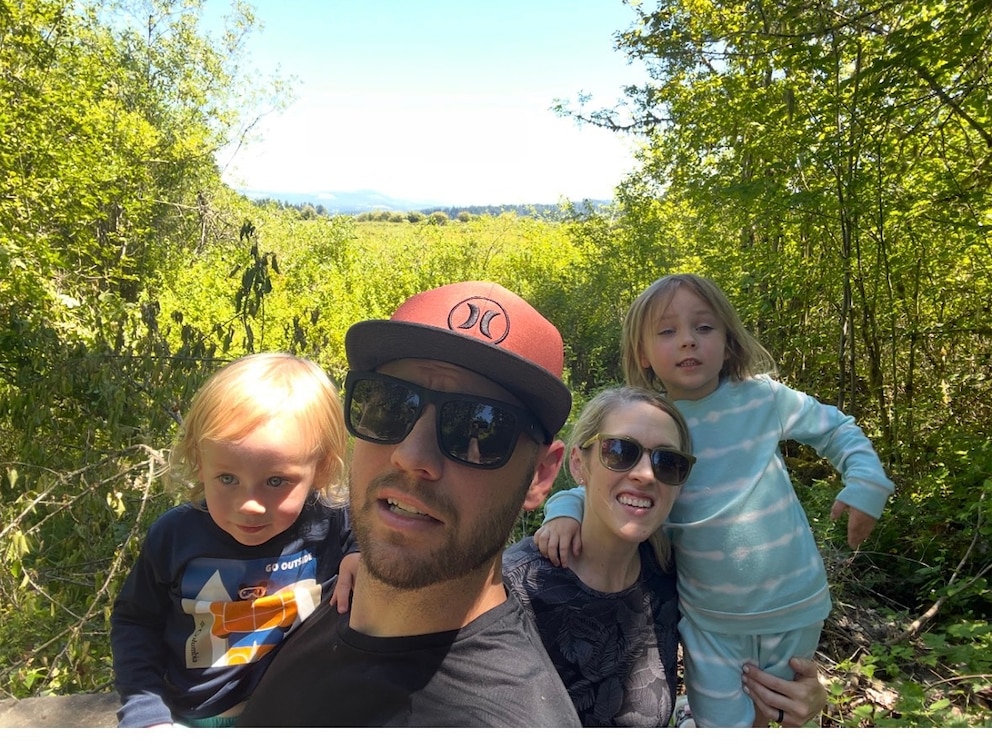
Arneson said he and his wife, Danielle Arneson, who are also parents to two older kids, are taking it day by day with Jack in the hospital and remaining hopeful that he can get better before he gets another open-heart surgery.
Arneson added that he and his family wanted to raise awareness of Jack’s rare conditions.
“If there’s another kid out there somewhere that has something similar to this going on, hopefully. this can bring more attention to it,” he said.
Miller-Smith added that Jack’s story also highlights the extra support kids like Jack and their families need.
“These families need a lot of support, both from resources in the hospital and from their community,” she said.
Arneson said his sister has set up an online fundraiser to help support his family and cover Jack’s medical expenses.
