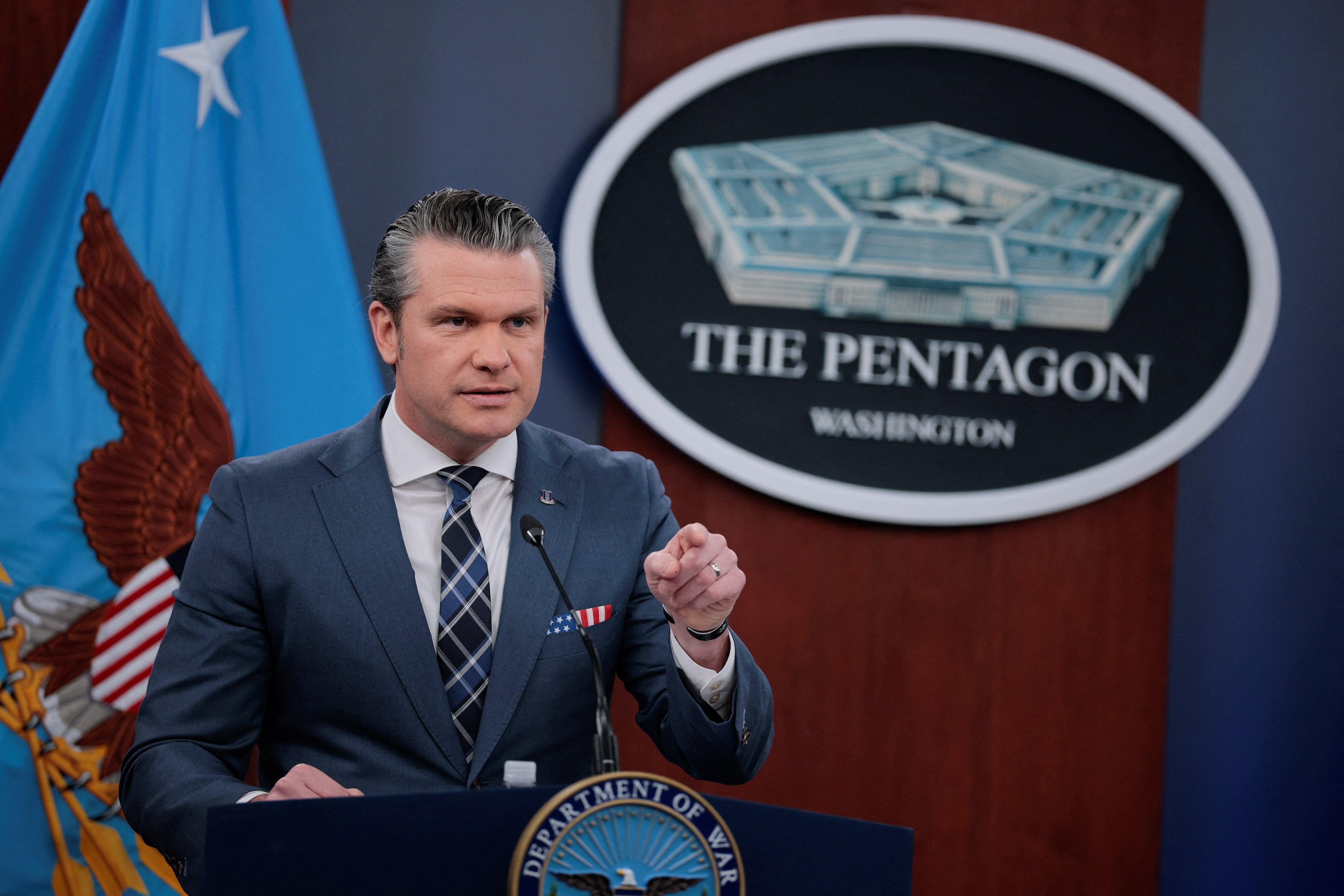
The Pentagon’s own publication, Stars and Stripes, was disinvited from Defense Secretary Pete Hegseth’s latest Iran war press conference – as he continues to clamp down on press coverage.
“Stars and Stripes was not approved by the Pentagon to attend this press conference. I will be watching it on a screen instead,” Matthew Adams, a reporter at the outlet, said in a post on social media. “Seems a bit odd since the Pentagon published a memo with changes to the newspaper, including content overhaul.”
The memo referenced by Adams was a Pentagon missive detailing “new restrictions on content” in the publication that includes a requirement that the outlet abide by “good order and discipline,” which is presumably defined by the Department of Defense.
Kevin Baron, another Stars and Stripes reporter, was similarly shocked by the development and noted that the publication was set up to have editorial independence, not to be a mouthpiece for the Pentagon.
“The Pentagon blackballed its own newspaper from covering its own press conference? Reminder, Stars & Stripes employees are US Army civilians,” he wrote. “Their editorial independence is protected by Congress specifically to prevent political leaders from feeding troops propaganda.”
Timothy Richardson of PEN America, a freedom of speech advocacy nonprofit, told Stars and Stripes that the new content guidelines were clear signs that the Pentagon was trying to wrangle the outlet to deliver its preferred talking points.
“This clearly shows that the Pentagon is trying to increase its influence over content decisions at Stars and Stripes,” he said. “That’s a threat to the First Amendment, certainly, and the independence that Congress has long guaranteed for the newsroom.”
In January, Sean Parnell, the DOD’s chief Pentagon spokesperson, announced that the Trump administration was demanding changes to Stars and Stripes that would “modernize its operations” and “refocus its content away from woke distractions that siphon morale.”
The memo claims that Stars and Stripes will continue to publish with editorial independence, but must also adhere to the Pentagon’s new policies and stop publishing certain critical content.
That puts Stars and Stripes in a strange gray zone where every story has to be measured against the Pentagon’s vague definition of “good order and discipline.”
“If they were to complete a story that the Defense Department did not like, and did not find ‘consistent with good order and discipline,’ would they be in legal jeopardy?” Stars and Stripes editor-in-chief Erik Slavin told NPR Saturday. “We don’t know the answer to that.”
Slavin said he only learned about the Pentagon’s new policies three days after they were issued, and only because a staffer noticed them on a Department of Defense website.
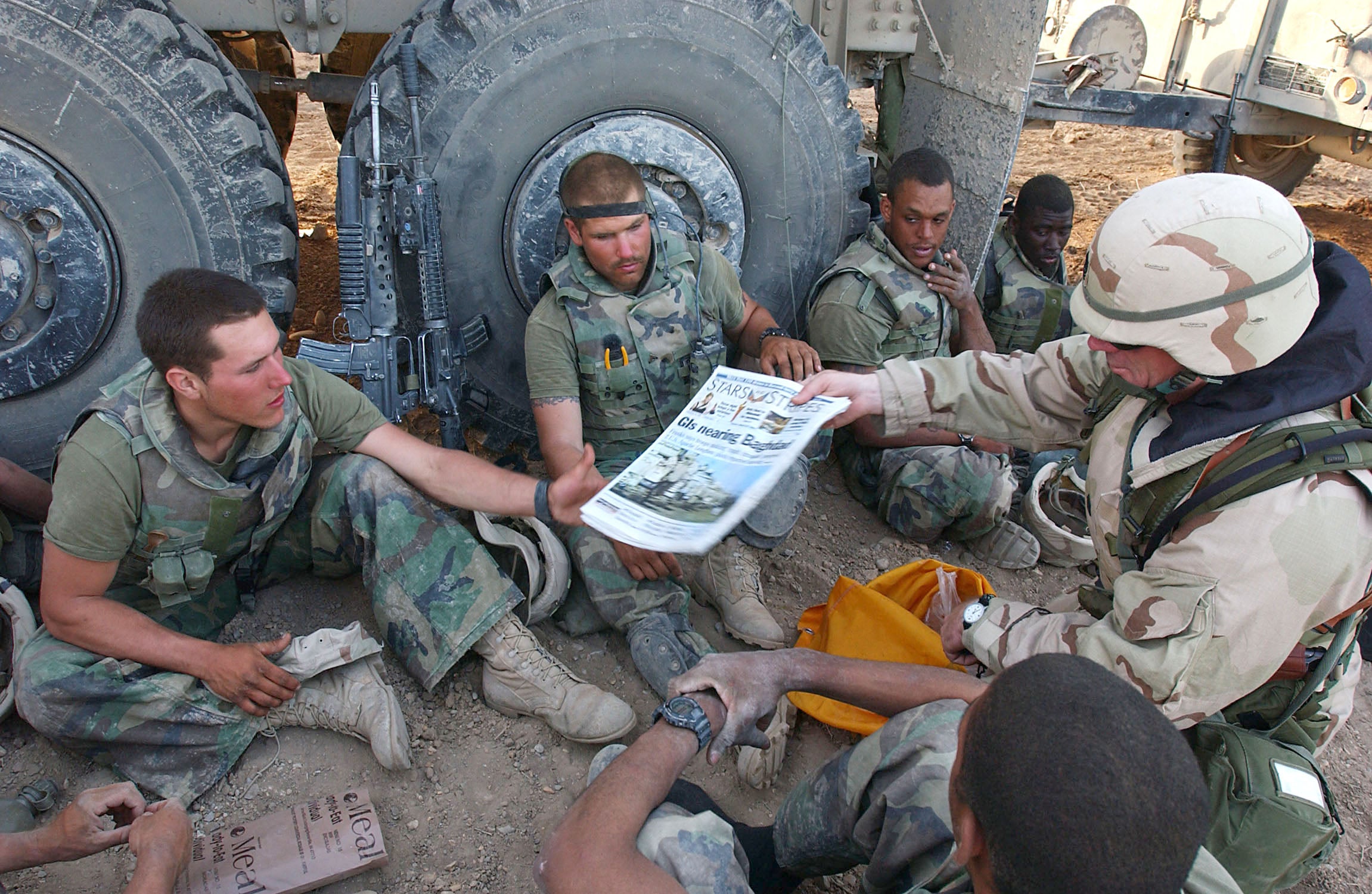
Stars and Stripes has been generally well-received by both Democrats and Republicans, including President Donald Trump during his first term.
During his first term, the Pentagon threatened to shut down the paper, but Trump stopped those efforts. He made a social media post at the time describing Stars and Stripes as a “wonderful source of information to our Great Military!”
The crackdown on Stars and Stripes comes at a time when Hegseth and Trump have been more brazen with their demands for positive media coverage as they continue to wage the unpopular war in Iran.
Earlier this month, Hegseth held a press conference where he accused the media of twisting the situation in Iran to make the U.S. look bad. Then, on Thursday, Hegseth continued to whine about critical press coverage.
“A dishonest and anti-Trump press will stop at nothing, we know this at this point, to downplay progress, amplify every cost, and call into question every step. Sadly, [Trump derangement syndrome] is in their DNA,” he said.
Trump went further, saying on Truth Social that media organizations reporting anything he deemed “fake” could be considered “TREASON.”
