
Inside The Most Horrific Slavery Breeding Farms of Cotton Plantations
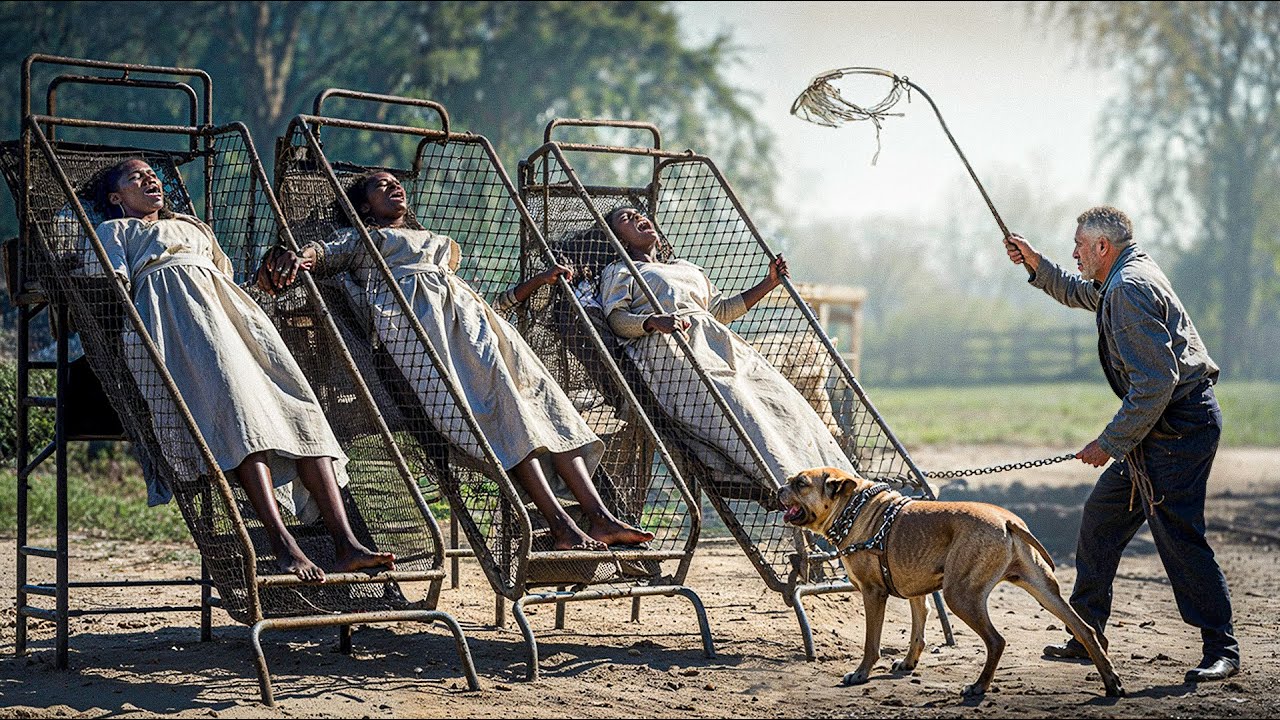
In the early 17th century the first African slaves were brought to the shores of North America marking the beginning of a dark chapter in the nation’s history the transatlantic slave trade which had begun in the late 15th century saw an estimated 12.5 million Africans forcibly transported across the Atlantic between 1525 and 1866 with around 10.7 million surviving the brutal Journey this human cargo torn from their homes and families would become the backbone of the American economy for Generations.
In 1619 the first recorded African slaves numbering around 20 arrived in Point Comfort Virginia aboard a Dutch ship this event though small in scale set the stage for the systematic enslavement of Africans in the American colonies as the Ganan scholar and poet aaia poignantly observed “the story of the African in the Americas begins with with a river of tears and a trail of blood” the emergence of slave farms in America was driven primarily by economic motivations as European colonists settled the new world they quickly realized the immense potential for agricultural profit however the labor intensive nature of crops like tobacco cotton and sugar required a significant Workforce indentured servants primarily from Europe were initially used to meet this demand but as the need for labor grew plantation owners turned increasingly to African slaves.
In 1705 the Virginia General Assembly passed a law stating that all slaves were to be held in Perpetual servitude effectively codifying the practice of chattle slavery this legislation was a response to the growing demand for cheap labor and the perceived need to maintain strict control over the African population Benjamin Franklin in a 1773 letter to Dean Woodward lamented the hypocrisy of the slave trade writing “phisical Britain to Pride thyself in setting free a single slave that happens to land on thy coasts while thy merchants in all thy ports are encouraged by thy laws to continue a Commerce whereby so many hundreds of thousands are dragged into a slavery that can scarce be said to end with their lives.”
The first slave Farm in North America was established in 1619 in Jamestown Virginia by the late 17th century slavery had become firmly entrenched in the American colonies particularly in the South the invention of the cotton Jin by Eli Whitney in 1793 revolutionized the cotton industry making it even more profitable and leading to a dramatic expansion of slave Farms across the southern states in South Carolina for example the slave population Grew From around 7,000 in 1700 to over 100,000 by 1790 this rapid expansion was fueled by the insatiable demand for cotton from the textile mills of the north and Great Britain as the Abolitionist William Lloyd Garrison observed in 1831 “we are going to decide the question whether the slaveholding soul driving system shall be continued whether the bosoms of our Northern freemen shall be made the receptacles of its spoils and their hearts the ab betters of its Abominations.”
Slave Farms quickly spread across the American and South concentrating in the coastal regions of South Carolina Georgia and Virginia as well as the Fertile lands along the Mississippi River in Louisiana and Mississippi the 1860 United States census recorded a slave population of nearly 4 million with the majority living and working on the estimated 46,2 plantations throughout the south in Louisiana the number of slaves Grew From around 4,000 in 1720 to over 331,000 by 1860 with many working on the state’s Infamous sugar cane plantations the Whitney Plantation in Wallace Louisiana which is now a museum dedicated to the history of slavery serves as a stark reminder of the brutality and scale of the slave trade as the former slave and abolitionist Henry bib wrote in his 1849 autobiography “slavery is a system of inhumanity that is founded in blood cherished in Blood and can only be abolished in blood.”
Life on these slave Farms was brutal and dehumanizing slaves were subjected to backbreaking labor from sunrise to sunset with little rest and often under the threat of physical punishment Frederick Douglas a former slave who became a prominent abolitionist described the conditions on a plantation in his 1845 autobiography Narrative of the Life of Frederick Douglas an American slave “the slaves selected to go to the great House Farm for the monthly allowance for themselves and their fellow slaves were peculiarly enthusiastic while on their way they would make the dense Old Woods for miles around reverberate with their wild songs revealing at once the highest joy and the deepest sadness.”
Douglas’s Vivid account of the slave songs highlights the complex emotions they experienced a Bittersweet mix of joy and sorrow that characterized their daily lives another former slave Harriet Jacobs who escaped to freedom in the north described the psychological toll of slavery in her 1861 autobiography incidents in the life of a slave girl “slavery is terrible for men but it is far more terrible for women super added to the burden common to all they have wrongs and sufferings and mortifications peculiarly their own.”
The crop cultivated on these Farms varied by region but the most common were cotton tobacco and sugar cane by 1860 The South was producing 75% of the world’s cotton with the majority grown and harvested by slaves tobacco which had been a staple crop since the colonial era also relied heavily on slave labor on Louisiana’s sugarcane plantations slaves endured particularly harsh conditions working in extreme heat and humidity to C cultivate and process the crop in 1853 Solomon norup a Freeborn African-American who was kidnapped and sold into slavery described the grueling work on a Louisiana sugar cane plantation in his Memoir 12 Years a Slave “the hands are required to be in the cotton field as soon as it is light in the morning and with the exception of 10 or 15 minutes which is given them at noon to swallow their allowance of cold bacon they are not permitted to be a moment idle until it is too dark to see and when the moon is full they often times labor till the middle of the night.”
Northup’s account underscores the unrelenting nature of slave labor and the inhumane conditions endured by those forced to work on these plantations the economic impact of slave Farms on the American economy was immense by 1860 the value of the South slave population was estimated at $3 billion equivalent to nearly $75 billion today slave grown crops accounted for more than half of all US exports and the textile mills of the north and Great Britain relied heavily on slave picked cotton this economic dependence on slavery made the issue of abolition a contentious and divisive one ultimately contributing to the outbreak of the American Civil War in 1861 in an 1854 speech the Abolitionist Wendell Phillips declared “the north has nothing to do with slavery so they say but slavery has something to do with the north it enters into its politics deranges its industry makes cowards of its public men corrupts its churches hardens the hearts of its people and lowers the standard of its morality.”
Shadows of the plantation the harrowing reality of enslaved life in America as the first rays of sunlight crept Over the Horizon the slaved people of the American South were already toiling in the fields from the tobacco plantations of Virginia to the cotton fields of Mississippi the daily life of an enslaved person was characterized by backbreaking labor unimaginable suffering and the constant threat of violence in the words of former slave Henry bib “I was a slave a prisoner for life I could possess nothing nor acquire anything but what must belong to my keeper.”
This sentiment was echoed by countless others such as Mary Prince a West Indian slave who later became an abolitionist in England in her 1831 autobiography she wrote “I have been a slave myself I know what slaves feel I can tell by myself what other slaves feel and by what they have told me the man that says slaves be quite happy in slavery that they don’t want to be free that man is either ignorant or a lying person.”
The living conditions for enslaved people were abysmal with families often crammed into tiny dilapidated cabins at the magnolia plantation in South Carolina archaeological evidence suggests that some slave cabins measured a mere 10 ft by 12 ft housing up to 10 individuals privacy was non-existent and the meager Furnishings typically consisted of nothing more than rough wooden bunks and a few cooking implements Frederick Douglas in his 1845 autobiography described the sleeping Arrangements on the plantation where he grew up “the children unable to work in the field had neither shoes stockings jackets nor trousers given to them their clothing consisted of two coarse linen shirts per year similar conditions were found on plantations across the South such as the Evergreen Plantation in Louisiana where the slave quarters consisted of four rows of 22 cabins each housing over 150 slaves at its peak in the mid 19th century.”
As the Abolitionist and former slave Sojourner Truth famously declared “I have borne 13 children and seen most all sold off to slavery and when I cried out with my mother’s grief none but Jesus heard me.”
Food was scarce and of poor quality with enslaved people often subsisting on a diet of cornmeal pork fat and molasses on some plantations slaves were forced to grow their own vegetables in small garden plots to mement their meager rations in his 1853 Memoir Solomon norup recounted the inadequate Provisions given to Slaves on a Louisiana Plantation “the allowance of each slave per week was a peck of corn and three or 4 pounds of pork or in lie of pork a bushel of sweet potatoes with a modicum of salt which they used to boil their homon and season their greens.”
This sparse diet led to widespread malnutrition and diseases such as pellagra a vitamin deficiency that causes diarrhea dermatitis and dementia the work day for enslaved people was long and grueling typically lasting from sunrise to sunset on Cotton plantations slaves were expected to pick a minimum of 200 lb of cotton per day a task that left their fingers bloody and their bodies exhausted failure to meet these quotas often resulted in severe punishments such as whippings beatings or even mutilation in his 1855 AO autobiography my bondage and my freedom Frederick Douglas described the brutality of Plantation overseers “the louder she screamed the harder he whipped and where the blood ran fastest there he whipped longest.”
This violence was not limited to adults children as young as three or four were put to work on plantations often as water carriers who brought water to field hands or as babysitters for the plantation owner children in 1852 ES escaped slave and abolitionist Moses Roper wrote of his experiences “I have often seen the overseer beat my mother when she was in travail and he would make her get up and go to work almost as soon as she was delivered of her child medical care for enslaved people was virtually non-existent with plantation owners often viewing slaves as Expendable Commodities diseases like chera dentry and pneumonia ran rampant through slave quarters claiming countless lives in some cases enslaved women were subjected to Medical experimentation such as the infamous surgeries performed by J Marian Sims who operated on enslaved women without anesthesia in the 1840s this lack of basic medical attention contributed to the high mortality rates among enslaved populations with the average life expectancy of a slave in 1850 being just 21.4 years on some plantations the infant mortality rate was as high as 50%.”
As former slave and abolitionist Sarah Parker remund observed in an 1859 speech “the slave mother’s heart bleeds when she thinks of her children for she knows not at what moment they may be torn from her bosom and sold where she may never more behold them.”
The psychological impact of slavery on those who endured it cannot be overstated families were torn apart with children ripped from their mother’s arms and sold to distant plantations the mistreatment of enslaved women by white slaveholders was rampant as illustrated by the tragic story of Celia an enslaved woman in Missouri who was repeatedly subjected to unwanted advances by her owner and later executed for killing him in self-defense In 1855 the constant fear degradation and Trauma experienced by enslaved people left deep scars that echoed through generations as the former slave and abolitionist William Wells Brown wrote in his 1847 Memoir “slavery has fixed a deep Gulf between the two races a dark abyss into which I fear both the oppressed and the oppressor will ultimately fall.”
This trauma was compounded by the systematic dehumanization of enslaved people who were treated as property rather than human beings Sparks of defiance resistance and rebellion in the face of slavery in the suffocating darkness of the slave quarters Whispers of of resistance drifted through the air like wisps of smoke from the tobacco fields of Virginia to the sugarcane plantations of Louisiana enslaved people across the American South fought against their oppressors in ways both subtle and overt risking their lives for a chance at Freedom as Harriet Tubman the famed conductor of the Underground Railroad once said “I had reasoned this out in my mind there was one of two things I had a right to Liberty or death if I could would not have one I would have the other.”
One of the most common forms of resistance was the work slowdown a tactic that allowed enslaved people to assert some control over their labor by feigning illness breaking tools or simply working at a glacial Pace they could sabotage the plantation’s productivity and frustrate their overseers in his 1845 autobiography Narrative of the Life of Frederick Douglas an American slave Douglas recounted how he and his fellow slaves would “sometimes make the dense Old Woods for miles around reverberate with their wild songs using music as a way to resist the dehumanizing effects of slavery this tactic was also employed by enslaved people on the sea Islands of South Carolina and Georgia who developed a unique musical tradition known as the shout a rhythmic call and response style of singing and dancing that served as both a form of spiritual expression and a way to communicate covertly in the presence of their overseers.”
Escape attempts were another form of resistance with countless enslaved people risking their lives to flee the plantations that held them captive the Underground Railroad a clandestine network of roots and safe houses helped thousands of slaves escape to freedom in the north and Canada Harriet Tubman Born Into Slavery in Maryland around 1820 became one of the most celebrated conductors on the Underground Railroad leading an estimated 70 slaves to freedom over the course of 13 missions her courage and tenacity earned her the nickname Moses a testament to her role as a deliverer of her people another notable figure in the Underground Railroad was William still a free-born black man who helped over 800 enslaved people escaped to Freedom as the Director of the Philadelphia anti-slavery society’s vigilance committee in his 1872 book The Underground Railroad records still wrote “the heroism and desperate struggle that many of our people had to endure should be kept Green in the memory of this and coming Generations.”
While individual acts of resistance were common enslaved people also staged larger scale revolts and rebellions That Shook the foundations of the slaveholding south in 1739 the Stono Rebellion saw around 20 enslaved Africans March through the South Carolina Countryside recruiting fellow slaves and killing at least 20 white people before being suppressed by militia forces the Rebellion which lasted for several days and covered over 20 miles struck fear into the hearts of white slaveholders and led to the passage of even more oppressive slave codes the rebels led by a man named Jimmy were heavily influenced by the Catholic teachings they had been exposed to in the Spanish colony of Florida where many had been previously enslaved as historian Peter H wood wrote in his book Black majority “the Stono Rebellion was the largest and bloodiest Revolt ever staged in Britain’s Mainland North American colonies.”
Another significant Uprising was the 1831 rebellion led by Nat Turner in Southampton County Virginia Turner a deeply religious man who believed he had been chosen by God to lead his people to Freedom gathered a group of around 70 enslaved and free black people and embarked on a campaign of violence against white slaveholders over the course of two days Turner and his followers killed an estimated 55 white people before being captured by militia forces the Rebellion sent shock waves through the South leading to heightened paranoia among white slaveholders and the passage of even stricter laws governing the lives of enslaved people in the aftermath of the Rebellion Turner was captured tried and hanged but his legacy lived on as a symbol of resistance and a warning to those who would seek to keep black people in Chains as Turner himself declared before his execution “I am here loaded with chains but this is nothing compared to the chains with which I have been bound by my fellow creatures.”
The German Coast uprising of 1811 which took place in Louisiana was the largest SL SL Revolt in US history led by Charles Deson an enslaved man originally from Haiti the Rebellion involved an estimated 200 to 500 slaves who marched on New Orleans with the goal of establishing an independent Black Republic the rebels armed with cane knives and makeshift weapons burned plantations and killed several white people before being brutally suppressed by militia forces in the aftermath of the uprising over 100 slaves were killed many of them beheaded and their heads displayed on Pikes as a warning to others the rebellion was heavily influenced by the Haitian revolution of 1791 to 1804 which saw enslaved people overthrow their French Colonial oppressors and established the First Independent Black Republic in the Americas as one of the Rebel leaders Kook declared during the uprising “we will show these whites that we are men not beasts of Burden.”
Despite the brutal reprisals that followed these rebellions the spirit of resistance could not be extinguished as William Wells Brown a former slave and abolitionist wrote in his 1847 Memoir “the slave has been deprived of his rights his Liberty and even his name he is a thing a chatt personal a piece of property a marketable commodity and yet he is a man with all the attributes of manhood and all the feelings and affections of humanity.”
This sentiment was echoed by Maria Stewart a free black woman who became one of the first women to speak publicly against slavery in the 1830s in an 1833 speech she declared “oh ye Daughters of Africa awake awake arise no longer sleep nor Slumber but distinguish yourselves show forth to the world that you are endowed with Noble and exalted faculties.”
The change that built an economy slavery’s Central role in America’s rise in the sweltering heat of the Southern Sun the rhythmic sounds of pickaxes and shovels reverberated through the sprawling cotton fields from sun up to sundown enslaved men women and children toiled under the watchful eyes of overseers their labors fueling the economic engine that would Propel the United States to Global prominence as the Abolitionist Frederick Douglas observed in his 18 1845 Memoir Narrative of the Life of Frederick Douglas an American slave “the slaveholding regime regards the slave not as a sentient being but as a thing a commodity an article of merchandise a chatt.”
This dehumanizing view was codified in law as evidenced by the 1705 Virginia Slave Code which declared that “all negro mulat and Indian slaves shall be held taken and adjudged to be real estate.”
The economic importance of slave labor to the American economy particularly in the southern states cannot be overstated by 1860 there were nearly 4 million enslaved people in the United States representing a staggering 133% of the total population the vast majority of these individuals were concentrated in the agricultural regions of the South where they formed the backbone of the plantation system on the eve of the Civil War the value of enslaved people as property was estimated at $3.5 billion equivalent to approximately 10 trillion in today’s dollars as historian Walter Johnson notes in his book River of dark dreams slavery and Empire in the cotton Kingdom “slavery was not just a labor system it was the nation’s largest financial asset worth more than all of America’s railroads and factories combined.”
This point was underscored by the 1860 US Census which revealed that the value of the South’s enslaved population was greater than the combined worth of all the nations railroads factories and Banks the profits generated by slave labor were not confined to the plantation owners themselves but rather permeated every aspect of the American economy the cotton picked by enslaved hands in the South was shipped to textile mills in the north where it was transformed into cloth for clothing and other Goods by 1850 cotton constituted more than half of all US exports and the revenues from these exports helped to finance the nation’s Westward Expansion the growth of its cities and the development of its burgeoning Industries as Senator James Henry Hammond of South Carolina famously declared in an 1858 speech “cotton is king and no power on Earth dares to make war upon it cotton is king.”
This sentiment was echoed by James deau a prominent Southern Economist and statistician who wrote In His influential Journal deo’s Review “the cotton crop of the United States is The Wonder of the age and the chief source of our power and influence abroad.”
The prophets from slave labor did not merely line the pockets of southern plantation owners but also flowed northward fueling the growth of Industries and financial institutions New England textile mills in particular were heavily depend dependent on Southern cotton and many of the Region’s most prominent families such as the ls and the appletons owed their fortunes to the slave trade as historian Eric foner notes in his book The Fiery trial Abraham Lincoln and American slavery “the slave economy of the Southern States had Ripple effects throughout the United States with plenty of merchants in New York City Boston and elsewhere profiting from the slave trade and investments in slave powered Industries.”
This point was driven home by the Abolitionist William Lloyd Garrison who declared in an 1831 speech “every man who eats the bread of slavery is a man stealer and deserves to have his name recorded among felons and handed down to posterity as an object of universal execration.”
The economic reach of slavery extended beyond the borders of the United States as well the cotton picked by enslaved laborers fed the textile mills of Great Britain fueling the industrial Revolution and cementing the United States position as a major player in the global economy by 1860 nearly 80% of the cotton consumed by British textile mills came from the American South and the revenues generated by this trade helped to finance the construction of vast Transportation networks including railroads and canals that would facilitate the further expansion of American Commerce as historian Sven Becker notes in his book Empire of cotton a global history “cotton and with its slavery became the driving force of a new globally interconnected economy that reshaped the world.”
The economic impact of slave labor was not limited to the agricultural sector however enslaved people were also put to work in a wide range of other industries from Iron Works and mines to Lumber Mills and shipyards in cities such as Charleston and New Orleans enslaved labor worked as dock workers construction workers and domestic servants their labors integral to the functioning of the urban economy as historian Ira Berlin writes in his book many thousands gone the first two centuries of slavery in North America “slavery was not a sideshow in American history but the main event.”
This point was underscored by the fact that in 1860 nearly half of all enslaved people in the United States lived in cities and towns rather than on plantations the profits generated by slave labor helped to create a small but immensely wealthy class of plantation owners who wielded enormous political and economic power these individuals known as the slave ocracy or the plantocracy dominated Southern society and politics using their influence to shape National policies on issues such as tariffs Banking and Westward Expansion as South Carolina Senator John C Cal hon declared in an 1837 speech “I hold that in the present state of civilization where two races of different origin and distinguished by color and other physical differences as well as intellectual are brought together the relation now existing in the slaveholding states between the two is instead of an evil a good a positive good.”
This view was echoed by Mississippi Senator Albert G Brown who declared in an 1858 speech “I believe that slavery is a positive good that it is a necessary institution that it is the only relation which can exist between the two races and that it is the duty of every Southern Man to maintain and defend it.”
The economic importance of slavery was not lost on those who sought to abolish the institution in his 1854 book slavery and the internal slave trade in the United States abolitionist Theodore Dwight weld wrote “the blood of the slave is the seed of the cotton plant and all its profits are steeped in the sweat and tears and blood of the bond man.”
This sentiment was echoed by Frederick Douglas who declared in an 1852 speech “the slave is the foundation of our Commerce the Cornerstone of our republicanism he is the senu of our strength the bone of our prosperity.”
The Abolitionist Movement gained momentum in the 1830s and 1840s as activists such as William Lloyd Garrison Harriet beer Stow and Sojourner Truth work to expose the brutal realities of slavery and galvanized public opinion against the institution the economic impact of slavery would ultimately prove to be a double-edged sword for the United States while the institution generated immense profits and fueled the nation’s rise to Global prominence it also swed the seeds of regional Division and conflict that would eventually lead to the Civil War as Abraham Lincoln observed in his second inaugural address delivered in the waning days of the conflict “fondly do we hope fervently do we pray that this Mighty scourge of War may speedily pass away yet if God Wills that it continue until all the wealth piled by the bondsman’s 250 years of unrequited toil shall be sunk and until every drop of blood drawn with the Lash shall be paid by another drawn with the sword as was said 3,000 years AO ago so still it must be said the judgments of the Lord are true and righteous altogether.”
Whispers In The Quarters the Hidden World of enslaved culture and Community as the sun dipped below the Horizon the sound of hushed voices and muffled laughter drifted through the cramped dimly lit slave quarters in these moments of respite from the backbreaking labor of the fields enslaved men and women gathered to share stories songs and memories of a Homeland many had never seen born into bondage on the plantations of the American South they had been stripped of their freedom their dignity and even their names yet despite the dehumanizing conditions of slavery these individuals managed to forge a rich cultural heritage and a sense of collective identity that would endure for Generations as the former slave and abolitionist Frederick Douglas wrote in his 1855 autobiography my bondage and my freedom “the slave’s happiness is not the end sought by slavery it is indeed a conceded point that to make a contented slave you must make a thoughtless one it is necessary to darken his moral and mental Vision And as far as possible to annihilate his power of reason.”
The cultural practices and traditions of enslaved communities were shaped by the diverse African backgrounds of their members torn from their native lands and thrust into a foreign World enslaved Africans brought with them a wealth of knowledge skills and beliefs that would form the foundation of a new distinctly africanamerican culture as historian Ira Berlin notes in his book many thousands gone the first two centuries of slavery in North America “the African diaspora was a cultural diaspora and the men and women who were swept up in it carried with them their language their religion their Aesthetics sensibilities their ways of knowing and doing.”
This cultural diversity was reflected in the various ethnic groups represented among the enslaved population including the akan Yuba Igbo and mandinka peoples of West Africa one of the most important aspects of enslaved culture was the preservation of African religious Traditions despite the efforts of slaveholders to convert their human property to Christianity many enslaved people continued to practice their native religions in secret historian Albert J rabito in his book slave religion the invisible institution in the antibellum South estimates that only about 10% of enslaved people in the United States were Christians by 1860 the rest maintained a rich spiritual life rooted in African Traditions such as vodon santaria and conja these practices often involved the use of charms amulets and herbal remedies to protect against evil spirits and cure illnesses as one former slave William Wells Brown recalled in his 1847 autobiography Narrative of William W Brown a fugitive slave “there was not a man or woman on the plantation but that believed in conjuration and some of them had great faith in their own powers of conjuring.”
These religious practices often took place in hidden locations such as the secluded Woods or the remote corners of plantations where enslaved people could gather to pray sing and dance without fear of punishment these gatherings known as brush Arbor meetings or hush Harbors provided a rare opportunity for insl aved people to express themselves freely and connect with their spiritual Traditions music and dance were another crucial element of enslaved culture serving both as a means of expression and a form of resistance works songs spirituals and field hollers provided a rhythmic accompaniment to the grueling labor of the plantations while also allowing enslaved people to communicate with each other and express their deepest emotions as historian Lawrence LaVine writes in his book Black Culture and black Consciousness “the spirituals are full of coded messages of double meanings of metaphors which not only describe the slaves relationship to God but their relationship to their masters and to the institution of slavery itself.”
Songs like steal away to Jesus and Wade In The Water contained hidden messages about escape and resistance While others like Swing Low Sweet Chariot and sometimes I feel like a motherless child expressed the profound sorrow and longing of the enslaved experience enslaved people also used music and dance to preserve their African Heritage and create a sense of community in the late 18th and early 19th centuries enslaved Africans in New Orleans gathered on Sundays in the city’s Congo Square to dance sing and play traditional African instruments such as the banjo and the drum these gatherings which Drew both enslaved and free people of color helped to keep African cultural Traditions alive and provided a rare opportunity for social interaction and self-expression as one Observer wrote in 1819 “the African slaves meet on the green by the swamp and rock the city with their Congo dances.”
Similar Gatherings took place on plantations throughout the South where enslaved people would come together to perform the ring shout a rhythmic circular dance that incorporated elements of African spirituality and European folk Traditions family and kinship networks were another critical aspect of enslaved culture and identity despite the constant threat of Separation through S enslaved people formed close-knit communities based on shared experience cultural traditions and Blood Ties extended family networks often stretching across multiple plantations provided a sense of belonging and support in the face of unimaginable hardship as historian Herbert Gutman notes in his book The Black family in slavery and freedom 1750 to 1925 “the most significant social unit in the slave quarters was the Family household defined as a group of people who regularly shared a common res residence and common food supply.”
These households often included multiple generations of family members as well as fictive kin who were not related by blood but had been informally adopted into the family the importance of family in enslaved culture is reflected in the naming practices of enslaved people many enslaved parents gave their children African names such as Cojo quase and Mina as a way of connecting them to their ancestral heritage others used familial surnames to mark their kinship ties even if they had no legal right to do so as historian Brenda Stevenson writes in her book life in black and white family and community in the slave South “surnames provided a means for slaves to assert their own sense of self and kin in a world that denied them legal identities.”
This practice is exemplified by the story of Sojourner Truth who was born into slavery in New York in 1797 with the name Isabella balfrey but later chose the name Sojourner Truth to reflect her new identity as a free woman and an activist for abolition and women’s rights the cultural practices and social structures of enslaved communities also served as a means of resistance against the dehumanizing conditions of slavery by maintaining their own Traditions values and ways of life enslaved people asserted their humanity and challenged the notion that they were mere property as Frederick Douglas wrote in his 1855 autobiography my bondage and my freedom “the slave system in its whole and in its details was utterly hateful to me I hated it in all its aspects its wrongs its Injustice its immorality its degradation its brutality I hated the coffel gang the slave driver the whip the Fetter and The Branding Iron I hated everything that reminded me of my condition.”
The unshackling America’s long march to toward emancipation in the flickering Candlelight of a small New England Church a group of men and women gathered their faces etched with determination it was the year 1831 and these brave souls had come together to form the New England anti-slavery Society one of the first organized abolitionist movements in the United States among them was William Lloyd Garrison a fiery aitor and journalist who would become one of the most influential figures in the fight against slavery in the inaugural issue of his newspaper The Liberator Garrison boldly declared “I will be as harsh as truth and as uncompromising as Justice on this subject I do not wish to think or speak or write with moderation.”
Garrison’s uncompromising stance was shared by many of his fellow abolitionists including the Quaker poet John Green Leaf Whittier who wrote In His 1833 poem the slave ships “no more shall the sighing of the slave the shrieks of his tortured Kindred rise in dread appeal to the pitying skies the voice of the bond man shall be heard ringing in Freedom’s holy word.”
Garrison’s words echoed the growing sentiment among a small but vocal group of Americans who believed that the institution of slavery was a moral Abomination that had to be eradicated the Abolitionist Movement had its roots in the Quaker Community which had been advocating for the abolition of slavery since the late 17th century in 1775 the Quaker abolitionist Anthony benaz founded the society for the relief of free Negroes unlawfully held in bondage the first abolitionist Society in North America benaz who had been born in France and immigrated to Philadelphia in 1731 was a tireless advocate for the rights of African-Americans and his writings helped to inspire a generation of abolitionists.
As he wrote in his 1762 pamphlet a caution and warning to Great Britain and her colonies “the Negroes are our fellow creatures and have Immortal Souls they have the same right to Liberty that we have they have the same natural affections and are equally sensible of pain and grief.”
However it wasn’t until the early 19th century that the movement began to gain wide attraction thanks in large part to the efforts of black abolitionists such as Frederick Douglas who escaped from slavery in 1838 and became one of the most powerful voices in the anti-slavery cause Born Into Slavery in Maryland in 1818 Douglas had been taught to read and write by his owner’s wife a rare and dangerous act that was strictly forbidden by law after escaping to the north Douglas quickly became a prominent figure in the Abolitionist Movement using his oratorical skills and his personal story of Liberation to sway public opinion in his 1845 autobiography Narrative of the Life of Frederick Douglas an American slave Douglas wrote “I have often been awakened at the dawn of day by the most heart-rending shrieks of an own Aunt of mine whom he used to tie up to a joist and whip upon her naked back till she was literally covered with blood.”
The Abolitionist Movement faced significant obstacles not least of which was the deeply entrenched economic and political power of the slaveholding states in the early days of the Republic slavery had been a contentious issue with many of the founding fathers including Thomas Jefferson and George Washington expressing moral qualms about the practice in his 1785 notes on the state of Virginia Jefferson wrote “the whole commerce between master and slave is a Perpetual exercise of the most boisterous passions the most unremitting despotism on the one part and degrading submissions on the other.”
However the invention of the cotton gin in 1793 had made slavery hugely profitable and by the mid 19th century the southern states were heavily dependent on slave labor to sustain their agricultural economy as a result any attempt to abolish slavery was met with Fierce resistance from Southern politicians and plantation owners despite these challenges the abolitionists persisted in their efforts to bring an end to The Peculiar institution one of the most significant moments in the early Abolitionist Movement came in 1831 when Nat Turner an enslaved preacher in Virginia led a rebellion that resulted in the deaths of over 50 white people the Turner Rebellion sent shock waves through the South and sparked a wave of repressive legislation aimed at controlling the enslaved population however it also galvanized the Abolitionist Movement which saw Turner as a martyr in the fight against slavery in his 1832 pamphlet The confessions of Nat Turner Thomas R gray the lawyer who interviewed Turner before his execution wrote “he is a complete fanatic or plays his part most admirably on other subjects he possesses an uncommon share of intelligence with a mind capable of attaining anything but warped and perverted by the influence of early impressions.”
In the decades that followed the Abolitionist Movement continued to gain momentum thanks in large part to the tireless efforts of activists like Frederick Douglas soura truth and Harriet Tubman Sojourner Truth who had been born into slavery in New York and escaped to freedom in 1826 became one of the most powerful voices in the anti-slavery and women’s rights movements in her famous 1851 speech ATI a woman delivered at the Ohio Women’s Rights Convention truth declared “that man over there says that women need to be helped into carriages and lifted over ditches and to have the best place everywhere nobody ever helps me into carriages or over mud puddles or gives me any best place and ain’t I a woman.”
As the Abolitionist Movement gained strength so too did the backlash against it in 1850 Congress passed the Fugitive Slave Act which required northern states to return escaped slaves to their southern owners and imposed harsh penalties on anyone who aided in their escape the Act was met with outrage in the north where many people saw it as a violation of their moral and religious principles in his 1852 novel Uncle Tom’s Cabin which became a sensation and helped to turn public opinion against slavery Harriet beer Stow wrote “The Law of God written on the heart cannot be repealed by any human enactment.”
Sto’s novel which told the story of a kind and Pious slave named Uncle Tom and his cruel Master Simon lree became a rallying cry for the Abolitionist Movement and helped to mobilize public opinion against the evils of slavery despite the opposition the Abolitionist Movement continued to build momentum throughout the 1850s thanks in part to the growing sectional tensions between the North and the South in 1854 Congress passed the Kansas Nebraska Act which allowed the residents of those territories to decide for themselves whether to allow slavery the ACT led to a period of bloody conflict known as Bleeding Kansas as pro- and anti-slavery forces battled for control of the territory the violence in Kansas along with the ongoing debate over the expansion of slavery into new territories helped to fuel the rise of the Republican party which was founded in 1854 on a platform of opposition to slavery as the party’s first presidential candidate John C Fremont declared in his 1856 campaign slogan “Free Soil Free Speech free labor and free men.”
The election of Abraham Lincoln as president in 1860 marked a turning point in the struggle over slavery Lincoln who had opposed the expansion of slavery into new territories was seen as a threat to the southern way of life and his election prompted seven southern states to secede from the union forming the Confederate States of America the Civil War that followed followed would ultimately lead to the abolition of slavery thanks in large part to Lincoln’s Emancipation Proclamation of 1863 which declared that “all slaves in Rebel states were forever free.”
As we delve into the history of slavery Farms it’s vital to remember the names and faces of those who endured unimaginable hardships from the harrowing Tales of Harriot Tubman’s courageous escapes to the poignant words of Frederick Douglas “if there is no struggle there is no progress.”
These stories remind us of the resilience and strength of the human Spirit reflecting on this dark chapter we honor their memory and vow to learn from the past thank you for joining us on this journey until next time stay curious stay informed and never stop Seeking Justice goodbye.
